
Views: 0 Author: Nursen Publish Time: 2025-12-10 Origin: https://www.luphitouch.com


The design of the coffee machine panel structure needs to take into account functional integration, ease of operation, durability and aesthetics. Its core content includes five aspects: overall layout planning, functional module division, human-machine interaction design, structural strength and stability, material and process matching. The following is a specific content and practical case analysis:
1、Centralized Core Functional Areas
Work Area: Place high-frequency operation buttons such as Start/Stop and mode selection (e.g., Americano/Espresso/Latte) in the center or prominent position of the panel, ensuring users can operate without moving their line of sight. For example, DeLonghi PrimaDonna Soul's panel uses a circular touch screen with the "Start" button at the center and 12 beverage icons surrounding it, reducing the operating path by 30%.
Parameter Adjustment Area: Set low-frequency but critical parameters such as grind size, water temperature, and pre-infusion time in the secondary menu or side area to avoid distractions from core operations.
2、 Hide the Accessibility Area
Cleaning/Maintenance Area: Hide auxiliary functions such as cleaning mode, descaling reminder, water tank/coffee grounds box status indicator, etc. at the bottom or side of the panel and trigger them through long press or key combinations.
Connection area: Hide power ports, network interfaces (such as Wi-Fi/Bluetooth), etc., behind the panel or at the bottom to maintain a clean appearance. For example, a commercial coffee machine has a detachable cover on its back that covers all ports and provides a cable management slot for easy organization.
3、 Visual balance and brand elements integration
Symmetrical Layout: Utilizing a design that is symmetrical from left to right or top to bottom, enhancing visual stability.
Brand color integration: Reinforce brand recognition through the color of buttons, the style of indicator lights, or the design of decorative strips. For example, the Starbucks Verismo panel uses green backlit buttons that match the brand's primary color.
1、Keyboard Module Design
Physical Button: Suitable for high-frequency operations (such as start/stop), it must meet the following requirements:
Clear Tactile Feedback: Key travel ≥ 1.5mm, moderate return force (e.g., 40-60g force) to avoid accidental activation.
Waterproof and Dustproof: The gap between the button and panel is ≤ 0.3mm, and a silicone seal ring is used for waterproofing.
Touch buttons: Suitable for parameter adjustment or menu navigation, the following features need to be optimized:
Sensitivity: Supports operation with gloves (such as medical-grade gloves), response time ≤ 100ms.
Anti-misoperation: Trigger critical operations through long press, slide, or combination keys. For instance, a certain model needs to simultaneously press the "Clean" + "Confirm" keys for 3 seconds to enter maintenance mode.
2、Display Module Design
Screen Type Selection:
*Monochrome Screen: Suitable for status display (e.g., water temperature, remaining cups), low cost and power consumption. For example, a basic coffee machine uses an OLED monochrome screen to display only critical information, resulting in a 50% increase in battery life.
*Color Screen: Supports graphic navigation and animation effects, enhancing the interactive experience.
Display Content Planning:
*Core Information Priority: Place critical information such as production progress and fault warnings at the center of the screen with font size ≥16pt.
*Hierarchical Display: Show information in layers through a main interface (level-one menu) and sub-interface (level-two menu) to prevent information overload. For example, on the main interface of a certain model, "In Production" is displayed; clicking it leads to the sub-interface showing specific parameters (e.g., water temperature 92°C, pressure 15 bar).
3、Design of the indicator module.
State differentiation: Different colors/flashing frequencies represent different states:
*Green steady on: Standby/Normal operation.
*Red flashing: Fault (such as water tank low water, pressure anomaly).
*Blue flashing: Connecting to the network/Waiting for operation.
Location optimization: Integrate indicator lights next to buttons or at the edge of the screen to avoid additional holes that increase costs. For example, a certain model embeds the "cleaning prompt" indicator light inside the "cleaning" button, using changes in backlight color to indicate status.
1、 Simplify the operational logic
One-button multi-function: Different functions can be achieved by long pressing or short pressing. For example, on a certain model, short pressing the "Create" key starts the default mode, and long pressing enters the custom mode.
Visualizing Status: Display the current status using progress bars, percentages, or icons.
Fault-proof Design: Implement a secondary confirmation for critical operations (such as emptying coffee grounds). For instance, display a pop-up message asking "Are you sure to empty the coffee grounds box?" and require clicking "Confirm" before proceeding.
2、Optimization of Feedback Mechanism
Visual feedback: When the button is pressed, the backlight changes color (e.g. from white to orange) or the screen displays the operation result (e.g. "Grind level has been adjusted to Level 5").
Auditory feedback: A brief beep (such as a "beep" sound) confirms the effectiveness of button pressing, while continuous or specific frequency sounds indicate anomalies (e.g., persistent buzzing when the water tank is low on water).
Haptic feedback: Touchscreens emulate the tactile feel of mechanical keys through vibration motors (such as adjustable vibration intensity), or physical keys employ haptic feedback technology (like piezoelectric ceramic vibrations).
1、Design of Key Position and Connection Structure
Clamping Strength: The panel and the main body are secured through multiple clamping positions (e.g., 4 platform clamps + 3 side wall clamps), with a clamping depth of ≥2mm to ensure no detachment in vibrating environments. For instance, a mold employs a stepped sliding groove design to enhance slider strength and prevent deformation of the moving mold insert.
Connection Method: A combination of snap-fit and screws is used for dual-fixation, with the snap-fit facilitating quick assembly and screws ensuring long-term stability. For instance, a commercial coffee machine panel is secured by four M3 screws, with maintenance holes included for easy disassembly.
2、Heat dissipation and deformation prevention design
Cooling Channel: Design cooling holes or heat sinks on the back of the panel to ensure that the temperature of internal components (such as the motherboard and heating module) is ≤65℃. For example, a certain model has honeycomb-shaped cooling holes on the back of the panel, which, combined with an internal fan, forms convection and improves heat dissipation efficiency by 30%.
Anti-deformation Structure: Reinforcement ribs (such as cross-shaped or circular ribs) are added inside the panel, with a thickness of ≥1.5mm to prevent deformation caused by high temperature or external force. For example, a certain panel passed an 85℃ high-temperature test without deformation after adding three circular reinforcement ribs.
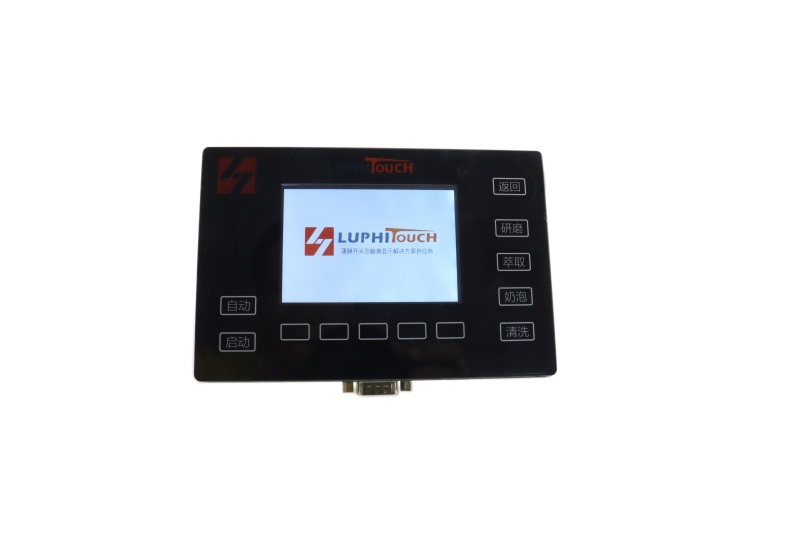
1、Material Selection
Case Material: Polycarbonate (PC) or PC+ABS alloy, balancing impact resistance and cost. For instance, a basic coffee machine uses a PC case, reducing costs by 15% while enhancing wear resistance through surface UV coating.
Internal components: Polyamide (PA) or Polyethylene Terephthalate (PET), with excellent heat resistance. For example, the coffee powder container is made of PA material and can withstand high temperatures of up to 120°C without deformation.
Transparent component: Polymethyl methacrylate (PMMA), light transmittance ≥92%, suitable for indicator covers or observation windows.
2、Technical Implementation
Injection Molding: Suitable for complex structures (such as curved panels, multi-snap design), the use of three-plate mold or hot runner technology improves product yield. For example, a certain mold adopts a hot runner system, hiding gate marks on non-appearance surfaces to enhance product aesthetics.
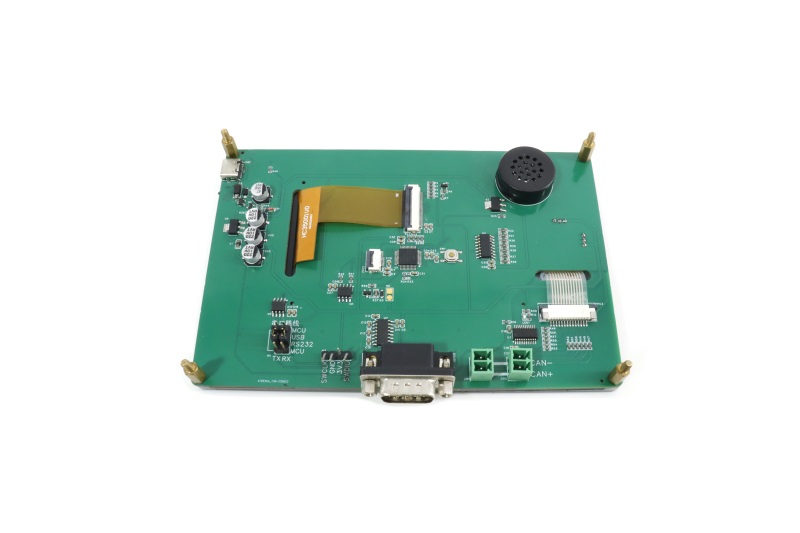
Surface Treatment:
*Spraying: Water-based paint is environmentally friendly and has strong adhesion, suitable for matte or frosted effects. For example, a high-end model uses gun gray water-based spraying, with a texture close to metal.
*PVD coating: Vacuum coating achieves a metallic texture and has better wear resistance than electroplating. For instance, one model enhances surface hardness to 5H and improves scratch resistance by 50% through PVD coating.
*IML technology: In-mold lamination achieves clear patterns without transparency, suitable for personalized customization. For example, a brand prints brand story patterns on the panel through IML technology, enhancing product premium ability.


